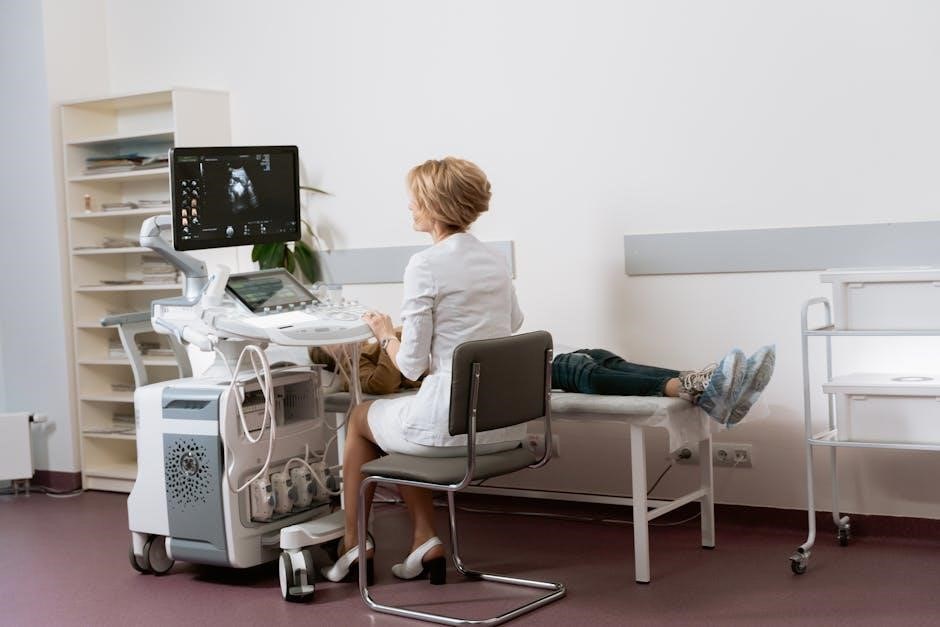
Understanding the nuances of CPT coding for ultrasound-guided thyroid fine needle aspirations (FNAs) is crucial for accurate billing and reimbursement.
This process involves selecting the primary code based on imaging guidance, and potentially add-on codes for additional lesions biopsied during the same session.
Proper documentation, including lesion location (ipsilateral or contralateral), is essential for supporting the chosen codes and avoiding claim denials;
The CPT code 10005 is frequently utilized, alongside imaging guidance codes, to accurately reflect the services rendered during these procedures.
Overview of Thyroid Biopsy Procedures
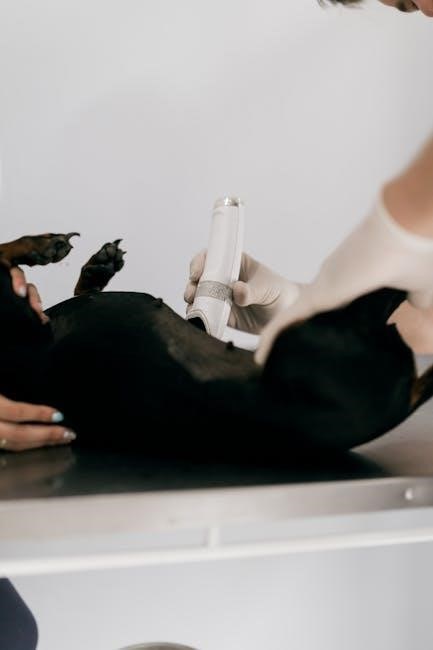
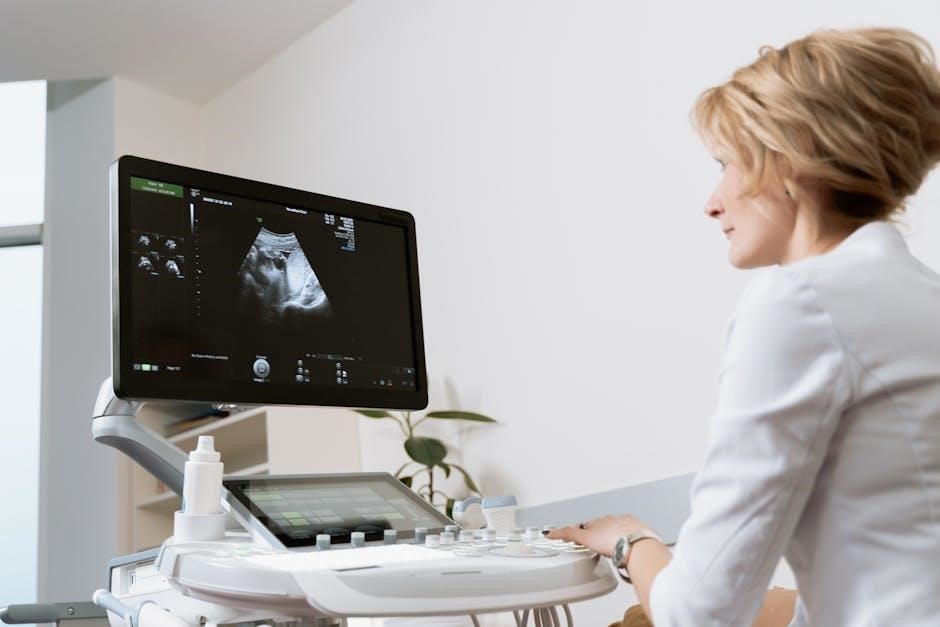
Ultrasound-guided thyroid biopsies, specifically Fine Needle Aspiration (FNA), are vital diagnostic tools for evaluating thyroid nodules. These procedures involve using real-time ultrasound imaging to precisely guide a thin needle into suspicious nodules, allowing for cell retrieval. The retrieved cells are then examined under a microscope by a cytopathologist to determine if cancerous or benign cells are present.
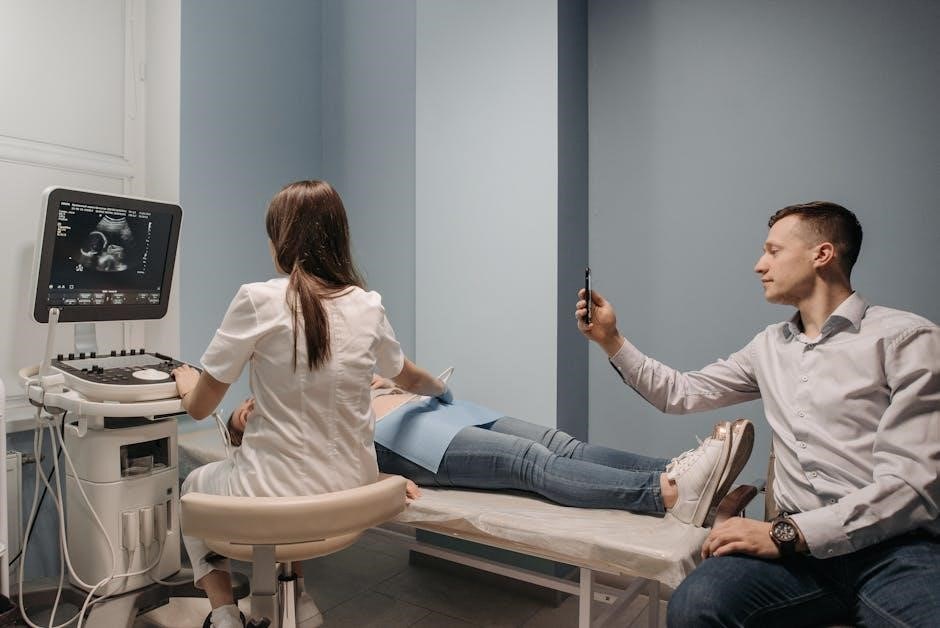
Typically, the patient lies supine with the neck extended, optimizing visualization of the thyroid gland. The ultrasound transducer is placed on the neck, and the target nodule is identified. Local anesthesia is often administered to minimize discomfort during the aspiration process. Multiple passes may be required to obtain an adequate sample for accurate diagnosis.
The procedure is generally quick, often completed within 15-30 minutes, and usually performed on an outpatient basis. Post-biopsy, patients are typically advised to apply pressure to the puncture site for a short period to minimize bleeding. Accurate CPT coding, like 10005, reflects the skill and precision involved in these procedures.
Importance of Accurate CPT Coding
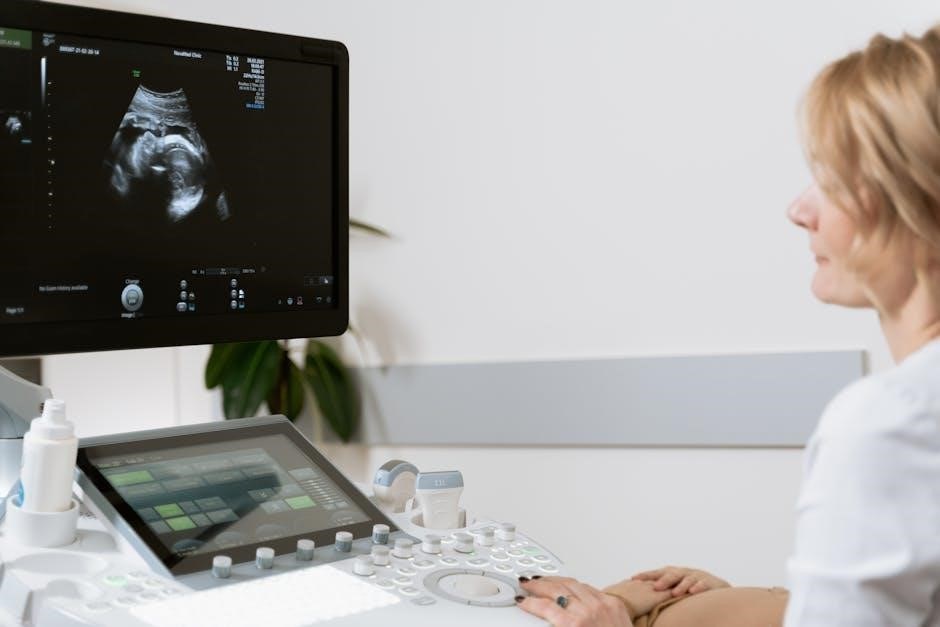
Accurate CPT coding for ultrasound-guided thyroid biopsies is paramount for several reasons, extending beyond simple billing compliance. Precise coding ensures appropriate reimbursement from payers, reflecting the actual services provided by the physician and facility. Incorrect coding, whether under-coding or over-coding, can lead to claim denials, audits, and potential legal ramifications.
Furthermore, accurate coding supports data collection for healthcare analytics, contributing to a better understanding of procedure utilization and cost. This data informs quality improvement initiatives and resource allocation. Utilizing the correct codes, such as 10005 and appropriate add-on codes, demonstrates medical necessity and justifies the services rendered.
Finally, meticulous coding practices uphold the integrity of the healthcare system, fostering trust between providers, payers, and patients. Proper documentation, coupled with precise CPT code selection, is essential for maintaining financial stability and delivering high-quality patient care.
CPT Codes for Ultrasound-Guided Thyroid FNA
Utilizing CPT codes accurately reflects ultrasound-guided thyroid fine needle aspiration procedures; 10005 is the primary code for this commonly performed diagnostic test.
CPT Code 10005: Fine Needle Aspiration (FNA)
CPT code 10005 represents fine needle aspiration (FNA) of the thyroid, encompassing the procedure itself, including the ultrasound guidance necessary for accurate needle placement. This code is specifically used when ultrasound is the imaging modality guiding the FNA. It’s crucial to understand that 10005 covers the aspiration of a single thyroid nodule.
The procedure involves inserting a thin needle into the thyroid nodule under real-time ultrasound visualization to collect cells for cytological examination. This examination helps determine if the nodule is benign, malignant, or requires further investigation. Radiology departments often require specific ordering protocols, such as a consult to radiology for the biopsy, ensuring the nodule meets established criteria for FNA and has prior imaging available within their system.
Proper documentation is paramount when using 10005, detailing the nodule’s location, size, and ultrasound characteristics. This supports medical necessity and accurate billing. Remember, additional lesions biopsied during the same session require separate coding considerations, utilizing add-on codes as appropriate.
Documentation Requirements for 10005
Comprehensive documentation is vital when billing CPT code 10005 for ultrasound-guided thyroid FNA. The medical record must clearly demonstrate medical necessity, justifying the procedure’s performance. This includes detailed descriptions of the thyroid nodule(s), encompassing size, location (left or right lobe), and relevant ultrasound characteristics – solid, cystic, or mixed.
Specifically, documentation should confirm the nodule met established criteria for FNA, often referencing prior imaging studies. The report must explicitly state that ultrasound guidance was utilized during the procedure, and the number of passes performed during the FNA.
Furthermore, the pathology report, detailing the cytological findings, must be readily available and linked to the procedure note. Accurate and complete documentation supports appropriate reimbursement and minimizes the risk of claim denials or audits. Any additional lesions biopsied during the same session must be distinctly documented to support the use of add-on codes.
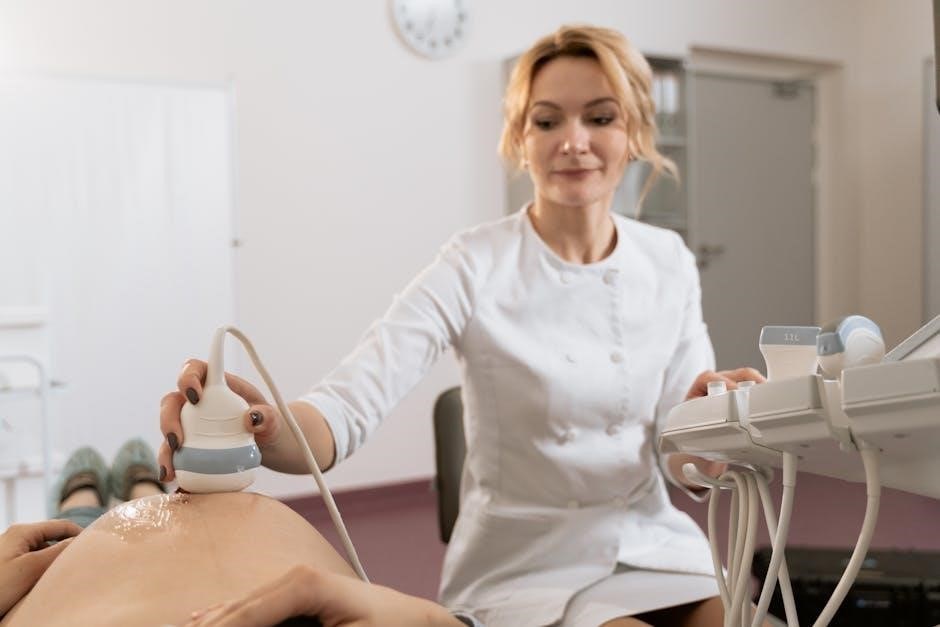
CPT Codes for Additional Thyroid Lesions Biopsied
When multiple thyroid lesions undergo FNA during a single session, add-on codes are essential for accurate billing, reflecting the increased work and resources utilized.
Add-on Code Considerations
Selecting the appropriate add-on code is vital when biopsying additional thyroid lesions during the same ultrasound-guided FNA procedure. These codes acknowledge the extra time, skill, and interpretation required for each subsequent lesion. The specific add-on code depends on the imaging guidance modality used – for ultrasound guidance, this is typically an extension of the 10005 code.
It’s crucial to remember that the add-on code isn’t simply a flat fee; it represents a distinct service for each additional lesion. Documentation must clearly support the biopsy of each lesion, including its location and size. The AAPC Knowledge Center emphasizes that these imaging guidance add-on codes apply regardless of whether the lesions are ipsilateral, contralateral, or even in different structures.
Incorrect application of add-on codes, such as omitting them when multiple lesions are biopsied, can lead to under-coding and reduced reimbursement. Conversely, inappropriately applying them can result in audits and claim denials.
Coding Multiple Lesions – Same Session
When performing ultrasound-guided FNAs on multiple thyroid lesions within the same session, accurate coding requires a primary procedure code (typically 10005) plus add-on codes for each additional lesion biopsied. This reflects the increased complexity and physician effort involved in evaluating and sampling each distinct nodule.
The AAPC Knowledge Center highlights that the add-on code application is consistent regardless of lesion location – whether ipsilateral (same side) or contralateral (opposite side) of the thyroid. The key is that each lesion requires separate evaluation and a distinct needle insertion. Thorough documentation is paramount, clearly identifying each lesion biopsied and justifying the use of the add-on code.
Failure to report add-on codes for all biopsied lesions constitutes under-coding, potentially leading to significant revenue loss. Accurate coding ensures appropriate reimbursement for the complete scope of services provided.
Imaging Guidance Codes & Modifiers
Imaging guidance codes, like those for ultrasound (76942), are essential when reporting ultrasound-guided thyroid FNAs, and add-on codes may apply.
These codes accurately represent the use of real-time imaging to precisely target and sample thyroid nodules during the biopsy procedure.
Ultrasound Guidance – Core Code
CPT code 10005 represents the core procedure for a fine needle aspiration (FNA) of a thyroid nodule, but it doesn’t inherently include ultrasound guidance. When ultrasound is utilized for real-time visualization during the FNA, an additional code is always required to accurately depict the complete service provided.
The primary ultrasound guidance code used in conjunction with 10005 is 76942. This code specifically describes ultrasound guidance for needle placement during a soft tissue biopsy, which directly applies to thyroid FNA procedures. It’s crucial to remember that 76942 isn’t an add-on code; it’s reported alongside 10005 to demonstrate the use of imaging guidance. Accurate documentation confirming the use of ultrasound is paramount for proper reimbursement. Failing to report 76942 when ultrasound guidance is performed constitutes under-coding and can lead to claim denials or reduced payments.
The combination of 10005 and 76942 accurately reflects the skill and technology involved in performing a safe and effective ultrasound-guided thyroid FNA.
When to Use Add-on Codes for Imaging Guidance
Add-on codes for imaging guidance come into play when multiple thyroid lesions are biopsied during the same session, all under the same imaging modality – in this case, ultrasound. While 76942 is reported with the initial 10005, subsequent lesions biopsied under ultrasound require an add-on code to reflect the increased work and complexity.
The appropriate add-on code is 76942, reported in addition to the initial 10005 and the first instance of 76942. Each additional lesion biopsied under ultrasound guidance necessitates another unit of 76942. This applies regardless of whether the lesions are located on the same side (ipsilateral) or opposite sides (contralateral) of the thyroid gland.
Proper documentation detailing each lesion biopsied is vital to support the use of these add-on codes. Accurate coding ensures appropriate reimbursement for the comprehensive service provided during a multi-lesion ultrasound-guided thyroid FNA.
Coding for Biopsy of Ipsilateral vs. Contralateral Nodules
CPT add-on codes for imaging guidance are utilized for both ipsilateral and contralateral thyroid nodules biopsied during the same session, regardless of location.
Ipsilateral Lesion Coding
When performing an ultrasound-guided FNA on a single thyroid nodule, the primary code 10005 is reported, representing the fine needle aspiration procedure itself. If additional lesions are biopsied during the same session, but are located on the same side of the thyroid (ipsilateral), appropriate add-on codes must be appended to accurately reflect the work performed.
These add-on codes account for the increased complexity and time associated with biopsying multiple lesions. The specific add-on code will depend on the imaging guidance used – for ultrasound guidance, this is a separate code appended to 10005. Accurate documentation detailing each lesion biopsied, including its location, is paramount for supporting the coding and ensuring appropriate reimbursement. Remember, each distinct lesion requires a corresponding add-on code.
Contralateral Lesion Coding – Add-on Code Application
Biopsying thyroid nodules on opposite sides of the thyroid gland (contralateral lesions) during the same ultrasound-guided FNA session requires careful coding. After reporting the initial 10005 for the first lesion, additional contralateral lesions necessitate the use of add-on codes to accurately represent the expanded scope of the procedure.
The application of these add-on codes remains consistent regardless of whether the lesions are ipsilateral or contralateral, or even within different organs. The key is that each distinct lesion biopsied requires a corresponding add-on code. Thorough documentation specifying the location of each biopsied nodule is vital for justifying the use of these codes and avoiding potential audit scrutiny. Proper coding ensures accurate reimbursement for the increased work involved.
CPT Codes Related to Thyroid Biopsy (Beyond FNA)
While 10005 covers FNA, CPT code 60100 represents excision procedures on the thyroid gland, differing significantly from a simple biopsy for cytological analysis.
CPT Code 60100: Excision Procedures on the Thyroid Gland
CPT code 60100 specifically describes excision procedures performed on the thyroid gland, representing a more extensive surgical intervention than a fine needle aspiration (FNA) biopsy. This code encompasses the complete removal of thyroid tissue, whether a partial or total lobectomy, or a complete thyroidectomy. It’s crucial to differentiate this from a biopsy, which only extracts a sample of cells for examination.
Unlike FNA biopsies guided by ultrasound (coded primarily with 10005 and potentially add-on codes), 60100 represents a definitive surgical treatment. The procedure involves incision, dissection, and removal of the affected thyroid tissue, followed by closure. Appropriate documentation must clearly indicate the extent of the excision – whether it’s a partial or total removal – to support the use of this code.
Furthermore, the use of imaging guidance, such as ultrasound, during the excision procedure itself doesn’t automatically change the primary code to 60100; it remains the appropriate code for the surgical removal of thyroid tissue. Accurate coding requires a clear understanding of the procedure performed and its scope.
Distinguishing Biopsy from Excision
Clearly differentiating between a thyroid biopsy and an excision is paramount for accurate CPT coding. A biopsy, like an ultrasound-guided FNA (10005), is a diagnostic procedure involving the removal of a small tissue sample for pathological analysis. It aims to determine the nature of a thyroid nodule – benign or malignant – without removing the entire structure.
Conversely, excision (60100) is a therapeutic procedure involving the surgical removal of all or part of the thyroid gland. This is typically performed after a diagnosis of cancer or a suspicious nodule requiring definitive treatment. The key distinction lies in the intent of the procedure: diagnosis versus treatment.
Documentation should explicitly state whether a sample was taken for diagnosis (biopsy) or if tissue was removed for treatment (excision). Confusing these can lead to significant billing errors and potential compliance issues. Remember, FNA is considered cytology, while excision is a surgical procedure.
CD-10-PCS Coding for Thyroid Biopsies
CD-10-PCS code 0G9G3ZX represents drainage of fluids/gases from the thyroid gland, percutaneously, and correlates with the CPT code used for the biopsy.
CD-10-PCS Code 0G9G3ZX: Drainage of Fluids/Gases
CD-10-PCS code 0G9G3ZX specifically details the drainage of fluids or gases from the thyroid gland lobe, utilizing a percutaneous approach. This code is often associated with ultrasound-guided thyroid biopsies, even though a biopsy isn’t strictly a drainage procedure.
The “0G” section indicates a drainage device, “9G” specifies the body part as the thyroid gland lobe, and “3ZX” details the approach (percutaneous) and qualifier (left lobe, though it can apply to either). It’s crucial to understand this code represents the action performed – removing fluid or material – rather than the diagnostic intent of the biopsy itself.
While CPT codes focus on the physician’s work (like FNA), CD-10-PCS codes describe the hospital’s perspective – the procedures performed within the facility. Accurate application of 0G9G3ZX alongside the appropriate CPT codes ensures comprehensive and compliant coding for thyroid biopsy procedures.
Relationship Between CPT and CD-10-PCS
CPT (Current Procedural Terminology) and CD-10-PCS (Clinical Classification System) serve distinct, yet complementary, roles in medical coding. CPT codes describe the services a physician or other healthcare provider performs – like an ultrasound-guided thyroid FNA (10005) – focusing on the professional component.
Conversely, CD-10-PCS codes detail the procedures performed within a hospital or facility, representing the facility’s perspective. For a thyroid biopsy, CD-10-PCS code 0G9G3ZX might represent the drainage of aspirated material.
These systems aren’t interchangeable; a single procedure often requires both a CPT code for the physician’s work and a CD-10-PCS code for the facility’s services. Accurate and complete coding necessitates understanding this relationship to ensure appropriate reimbursement and data reporting.
Reimbursement Considerations
Reimbursement for ultrasound-guided thyroid biopsies depends on factors like the Ambulatory Payment Classification (APC) and whether services are provided in a facility or non-facility setting.
APC and ASC Payment Information
Understanding the Ambulatory Payment Classification (APC) system and Ambulatory Surgical Center (ASC) payment rates is vital for maximizing reimbursement for ultrasound-guided thyroid biopsies; The specific APC assigned to CPT code 10005, along with any applicable add-on codes for imaging guidance or additional lesions, dictates the payment amount.
ASC payments generally differ from facility payments, often being lower due to the different cost structures. Accurate coding, including appropriate modifiers, directly impacts the APC assignment and subsequent reimbursement.
Payers frequently update APC and ASC rates, so staying current with coding guidelines and payment schedules is essential. Resources like the Centers for Medicare & Medicaid Services (CMS) provide detailed information on APC and ASC payment rates for specific procedures and settings. Proper documentation supporting medical necessity is also crucial for successful claim processing.
Non-Facility vs. Facility Coding
Distinguishing between non-facility and facility coding for ultrasound-guided thyroid biopsies is critical for accurate billing. Non-facility coding applies when the procedure is performed in a physician’s office or outpatient clinic, while facility coding is used in a hospital outpatient department or ASC.
The primary difference lies in the reimbursement rates; facility payments are generally higher to cover overhead costs. When billing non-facility, a modifier like -25 may be necessary to indicate that the FNA was a distinct, separately reportable service from the ultrasound guidance.
Correct modifier usage is paramount to avoid claim denials. Facility coding requires accurate reporting of place of service codes. Understanding these distinctions ensures appropriate reimbursement based on the setting where the procedure was performed, and proper adherence to payer guidelines.
Common Coding Errors to Avoid
Frequent errors include incorrect modifier application, under-coding or over-coding additional lesions, and failing to accurately document imaging guidance used during the ultrasound-guided thyroid biopsy.
Incorrect Modifier Usage
Modifiers play a vital role in accurately representing the services provided during an ultrasound-guided thyroid biopsy, but their misuse is a common coding error. For instance, failing to append the appropriate modifier when reporting multiple lesions biopsied in the same session can lead to claim denials or reduced reimbursement.
Specifically, understanding when to utilize add-on codes alongside the primary FNA code (10005) is crucial. Incorrectly applying modifiers to imaging guidance codes, or omitting them altogether when appropriate, can also cause issues. Thoroughly review payer guidelines and ensure modifiers accurately reflect the procedure’s specifics, such as laterality (left vs. right) or the number of lesions addressed. Proper modifier usage ensures accurate billing and avoids potential audit findings.
Always cross-reference documentation with the chosen modifiers to guarantee compliance.
Under-coding or Over-coding Additional Lesions
Accurate coding of additional thyroid lesions biopsied during the same ultrasound-guided session is paramount; Under-coding – failing to report all biopsied lesions – directly impacts reimbursement and doesn’t reflect the complete service provided. Conversely, over-coding – billing for lesions not actually biopsied – is considered fraudulent and can lead to severe penalties.
The key lies in meticulous documentation. Each lesion must be clearly identified and documented as being biopsied to support the use of add-on codes (like 10006). Remember, imaging guidance add-on codes apply regardless of lesion location. Ensure the documentation supports the number of lesions coded, and avoid assumptions.
Regular audits and staff training can mitigate these errors, ensuring compliance and maximizing appropriate reimbursement for thyroid biopsy procedures.